

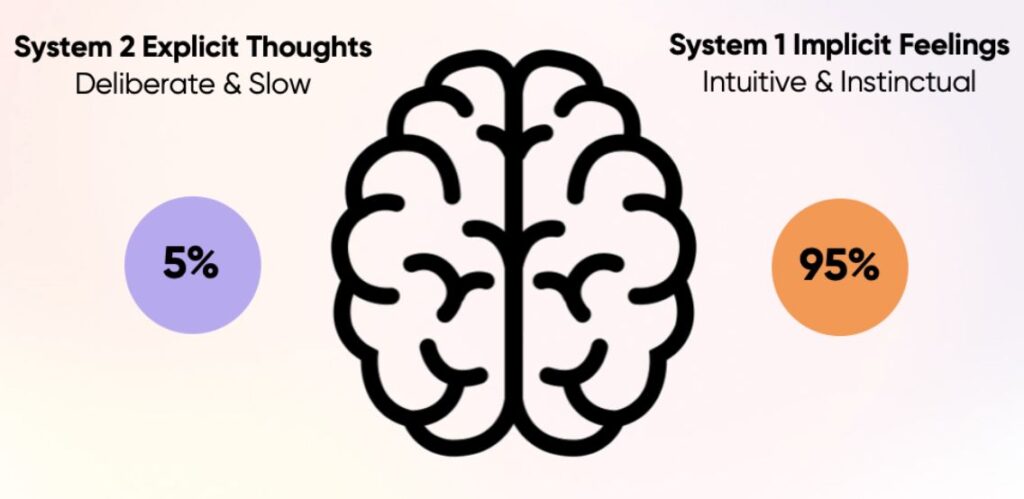
Daniel Kahneman’s Dual Systems framework has become one of the most referenced models for understanding how humans make decisions. Kahneman explains that our brains operate using two modes: System 1 and System 2. System 1 is fast and instinctive, while System 2 is slow and rational. This distinction has huge implications for how consumers choose brands and products.
System 1 and System 2: The Basics
System 1 is automatic. It drives intuition, feelings and rapid judgments. System 2 requires effort. It handles logic, evaluation and deliberate reasoning.
Although we like to believe our decisions are rational, most brand choices happen instinctively. Only after the fact do we rationalise them with System 2. This creates a blend of gut feeling and conscious explanation. Understanding this blend allows marketers to better predict how people behave.
Why Gut Decisions Matter for Brands
If most people buy based on gut feeling, then brands need to pay attention to what drives those instincts. Emotional signals, memory shortcuts and relatable stories shape how quickly people choose one brand over another. It explains why some brands win long before price or features enter the equation.
Nike is a familiar example. Its emotional storytelling fuels instinctive desire, while its product proof points satisfy rational justification. This dual play strengthens both the emotional and functional sides of the relationship.
How Brands Can Apply Kahneman’s Thinking
Applying Dual Systems to brand strategy starts with a shift in mindset. Rather than assuming consumers evaluate everything logically, brands need to understand how they make decisions in the real world. That means exploring how people feel first, then understanding how they explain those feelings.
Why This Still Matters Today
Modern marketing continues to prove that emotional relevance is a competitive advantage. Categories are crowded and consumer attention is fragmented, which means brands that trigger instinctive recognition and emotional affinity gain ground faster than those relying on rational persuasion alone.
Kahneman’s work is still cited today because it gives brands a framework for building more meaningful connections with people in the moments that matter most.
What Traction Believes
At Traction, we believe that long-term brand growth relies on understanding how people think, feel and act. Tools and methodologies that reveal emotional drivers help brands make better decisions and build stronger relationships. Data that mirrors real human behaviour gives marketers a clearer picture of why brands grow and how to influence that growth.
Final Thought
In short, System 1 fuels instinct and System 2 adds justification. Brands that acknowledge both sides unlock a deeper understanding of consumer choice and a stronger path to growth.