

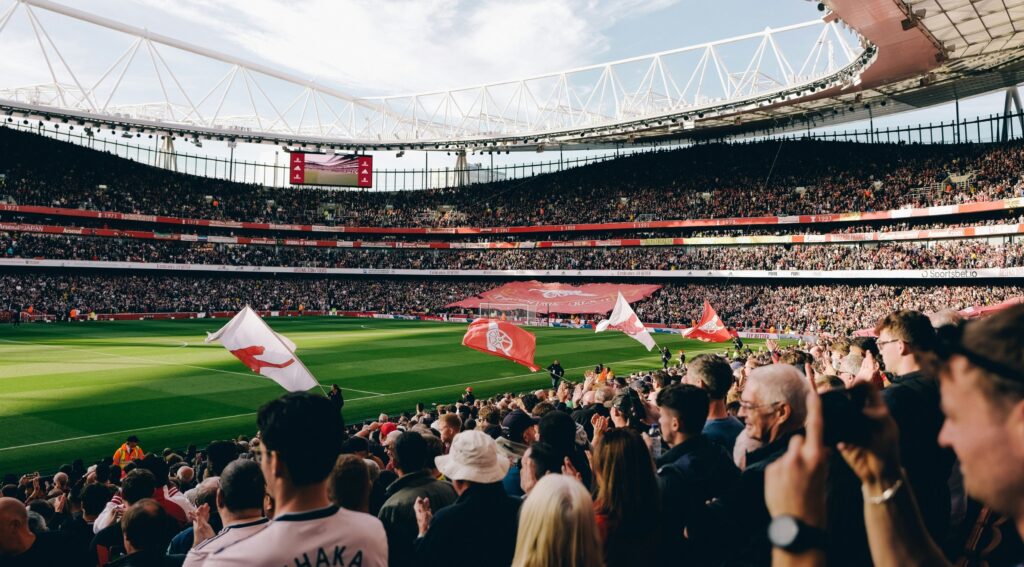
As another football season draws to a close in the UK, attention is already starting to shift towards what comes next.
Because while domestic leagues may be wrapping up, the sporting calendar is far from slowing down.
A major summer of sport is approaching, anticipation for the next World Cup cycle is already building, and for brands, that means one thing: competition for cultural relevance is about to intensify.
Every tournament creates the same opportunity. Millions of people become emotionally invested at the same time. Attention spikes. Conversations become collective. And brands rush to attach themselves to the moment.
But not every brand successfully becomes associated with football in consumers’ minds, it all comes down to how they structure their football sponsorship strategy.
Some naturally feel embedded within the sport. Others spend heavily trying to force the connection.
At Traction, we’ve been tracking how people associate brands with football using real-time consumer insight data. Looking at both men’s and women’s football independently reveals something interesting.
The brands people connect with football are not always the ones spending the most.
They are often the ones that have built the strongest emotional and cultural relationship with the sport over time.
The Brands Consumers Associate Most With Men’s Football
When consumers were asked which brands they most associate with men’s football, beer brands dominated.
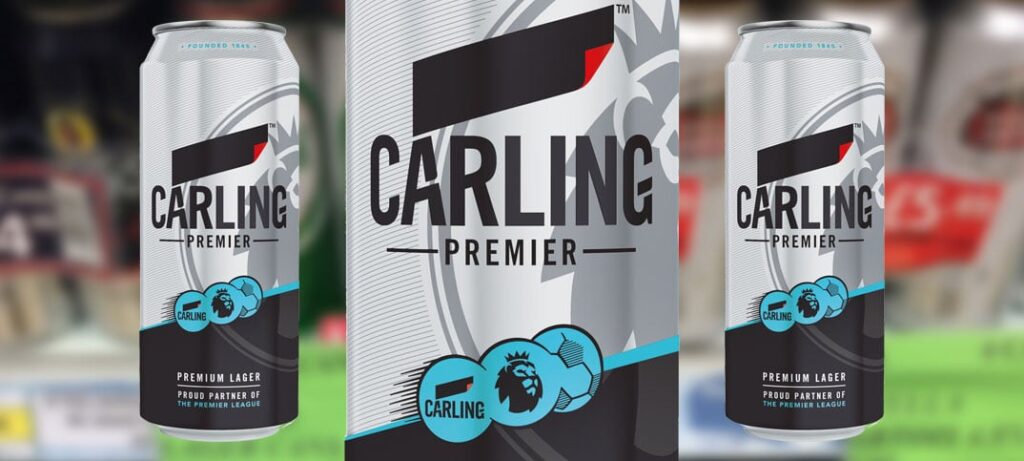
Carling led the category significantly, followed by Heineken, Carlsberg and Budweiser.
That is not entirely surprising.
Football and beer have been culturally intertwined for decades. Matchday rituals, pub culture, sponsorships and tournament advertising have all helped reinforce the relationship between these brands and the sport.
But what is interesting is the scale of the gap between the leading brands.
Carling significantly outperformed competitors when it came to football association. That strength likely comes from years of consistent positioning around football culture, piggybacking from their many collaborations in the early 2000’s rather than short-term campaign activity alone.
Football association is rarely built through one campaign.
It is built through repetition.
Repeated visibility. Repeated emotional context. Repeated presence in the moments where consumers already care.
This is where many sponsorship strategies fall short. Brands often believe presence equals association. But visibility alone does not guarantee emotional connection.
The strongest football brands tend to do something more.
They understand the role football already plays in people’s lives and position themselves naturally within that environment.
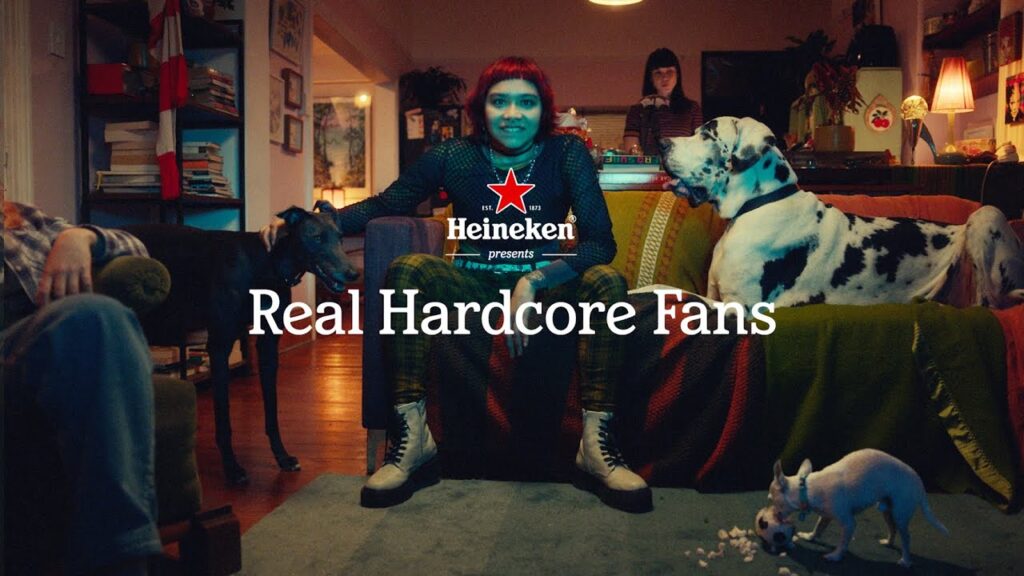
Heineken’s long-standing investment in elite football partnerships is a strong example. The brand consistently aligns itself with premium football occasions, particularly around European competitions, helping reinforce a more elevated and international football identity. Campaigns such as Heineken’s UEFA Champions League ‘Cheers to the Real Hardcore Fans’ platform and its long-running Champions League activations have helped reinforce that premium football association over time.
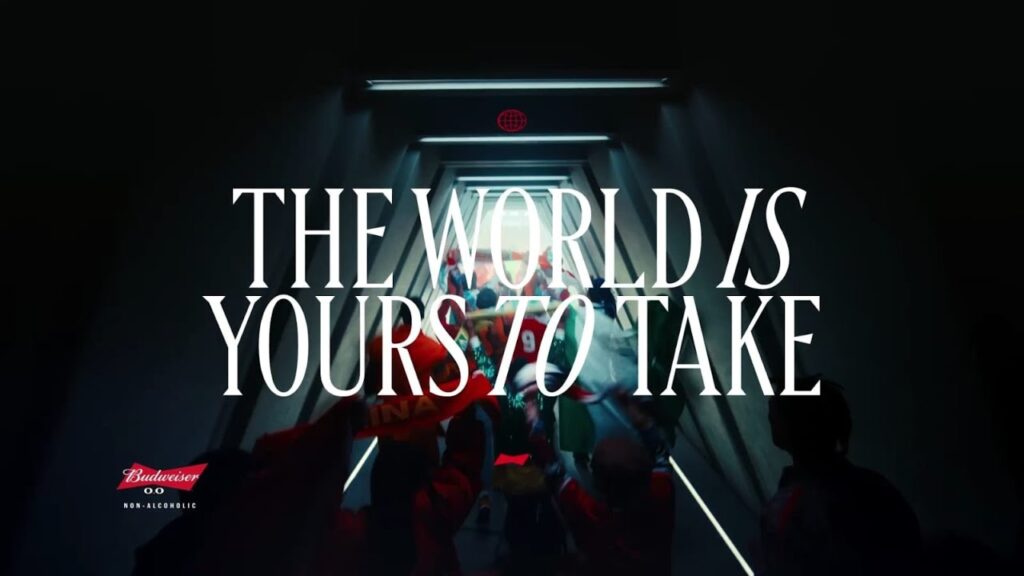
Budweiser, meanwhile, has leaned heavily into fan culture and emotional storytelling around major tournaments, positioning itself around celebration and shared moments. Its FIFA World Cup campaigns, including ‘The World Is Yours To Take’ featuring Lil Baby and Tears For Fears, pushed heavily into emotional fandom and collective celebration during tournament football.
But Carling’s strength arguably comes from something slightly different.
Rather than feeling like a tournament sponsor, it feels culturally embedded in football itself.
That distinction matters.
Women’s Football Creates a Different Brand Landscape
The picture changes significantly when looking at women’s football.
Instead of beer brands dominating the conversation, the strongest associations become much more diverse.
Barclays leads by a considerable margin, followed by Nike and Adidas.
That tells a bigger story about how consumers currently perceive women’s football.
Unlike the men’s game, which is deeply rooted in longstanding fan rituals and legacy sponsorships, women’s football is still shaping its commercial identity.
That creates a different type of opportunity for brands.
The brands performing strongest here are not necessarily those relying on tradition. They are the ones investing in visibility, representation and progression.
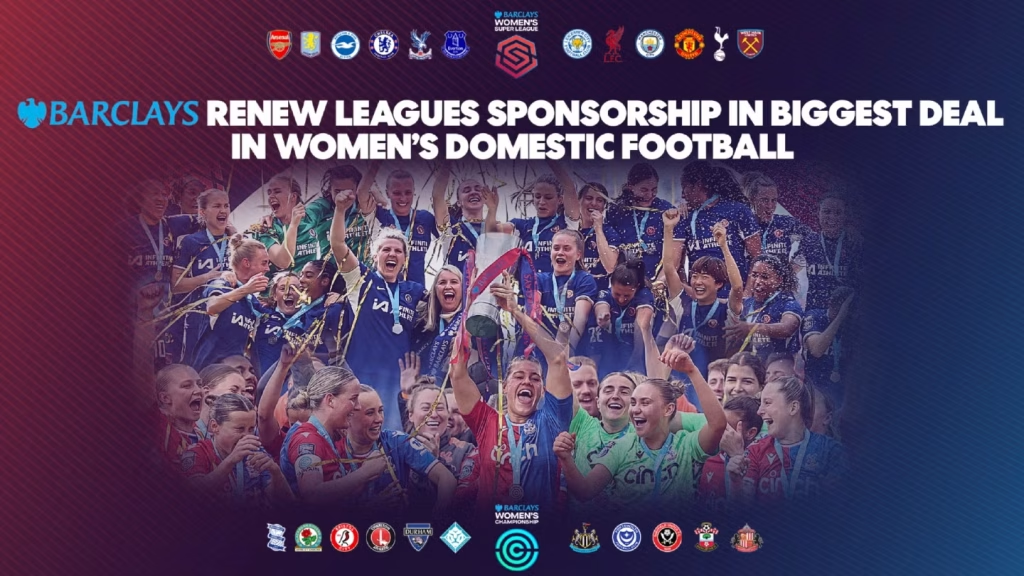
Barclays’ investment in women’s football has been particularly visible in recent years through title sponsorships and long-term support of the Women’s Super League. Campaigns such as Barclays’ ‘Anything Is Possible’ platform around the Women’s Euros helped position the brand as an active supporter of the growth of the women’s game rather than simply a sponsor attached to it. Importantly, the brand has not approached the category as a side project or supporting act. The investment has felt intentional and sustained.
That consistency appears to matter.
Nike and Adidas also perform strongly, likely because they naturally sit within both sport and identity. Nike’s ‘Never Settle, Never Done’ campaign around the Lionesses and Adidas’ women’s football storytelling around major tournaments both leaned heavily into empowerment, representation and visibility rather than just performance messaging alone.

That creates a different emotional relationship with audiences.
Interestingly, some traditionally dominant football brands perform far less strongly within women’s football than they do in the men’s game.
That highlights something important for marketers.
Women’s football is not simply an extension of the men’s game from a branding perspective.
Consumers appear to interpret the culture, values and emotional meaning around the sport differently.
Which means brands relying on existing football equity may not automatically transfer across.
What This Means for Brands Heading Into a Major Summer of Sport
With another major football summer approaching, many brands will already be planning campaigns, partnerships and activations.
But one of the most important questions marketers should ask before investing is not simply:
“Will people see this?”
It is:
“What role does our brand already play in this space?”
Because the strongest campaigns rarely create entirely new associations overnight.
They reinforce or strengthen existing ones.
Brands that already feel emotionally connected to football can amplify that relationship more effectively. Brands without that foundation often struggle to feel credible regardless of spend.
This is where real-time brand tracking becomes critical.
Understanding how consumers currently perceive your relationship with football allows brands to make far smarter strategic decisions.
It helps identify:
- Whether your brand already owns meaningful associations
- Which audiences connect most strongly with your activity
- How men’s and women’s football create different emotional responses
- Which competitors are gaining momentum
- Whether campaigns are genuinely strengthening brand equity or simply generating short-term visibility
Why This Connects Directly to the Traction Framework
Within the Traction framework, several Drivers become particularly important when looking at sports sponsorship and cultural association.
Popularity plays a major role. Football is inherently social and culturally visible, meaning brands associated with the sport often benefit from increased familiarity and collective recognition.
Connection is equally important. The brands consumers most strongly associate with football tend to feel emotionally aligned with the experience of the sport itself rather than simply present within it.
Relevance also matters heavily, particularly in women’s football where audiences appear to reward brands that feel genuinely invested in the growth and progression of the game.
And finally, Consistency remains one of the biggest differentiators.
The strongest associations are rarely built through isolated campaigns. They are built through repeated presence over time. This is exactly why always-on consumer insight matters, because brand perception does not move in isolated moments.
It evolves continuously.
Why Traction Matters More During Major Moments
Major moments such as sporting events compress attention. Brands have a very short window to influence perception while competition for visibility increases dramatically. That makes understanding real-time consumer response incredibly important.
At Traction, we track how people think and feel about brands continuously. Not weeks after a campaign has ended. Not through isolated research dips. But as perception changes in real time.
That allows marketers to understand not just whether people saw a campaign, but whether it actually strengthened the brand’s relationship with consumers.
Because ultimately, the brands that win around football are not always the loudest.
They are the ones that become part of how people experience the sport itself.
And that difference is exactly what modern brand tracking should help marketers understand.