

Customer feedback is everywhere. Reviews, surveys, social media comments, interviews. But volume does not equal value.
The brands that win are not the ones collecting the most feedback. They are the ones turning that feedback into insight and action.
In a fast-moving market, understanding what your customers think and feel is one of the most powerful advantages you can have. The challenge is knowing how to collect the right signals and use them in a way that drives growth.
Customer Feedback vs Customer Insight
It is important to separate feedback from insight.
Feedback is raw input. Comments, ratings, survey responses. Insight is what happens when that information is analysed, structured and translated into something actionable.
Without this step, feedback risks becoming noise. With it, it becomes one of the most valuable assets a brand can have.

Why Customer Insights Matter More Than Ever
Consumer expectations are constantly evolving. What worked six months ago may not work today.
Brands that continuously listen and adapt are far more likely to stay relevant, build stronger relationships and grow over time.
Customer insights help you understand not just what people are doing, but why they are doing it. And that is what drives better decision-making.
Turning Feedback Into Actionable Growth
Collecting feedback is only the starting point. The real value comes from how you use it.
Effective use of customer insights allows you to:
- Identify areas where your brand is underperforming
- Uncover unmet needs within your category
- Improve products, messaging and positioning
- Strengthen relationships with your audience
This is how feedback moves from being reactive to becoming a driver of proactive growth.
How This Connects to the Traction Framework
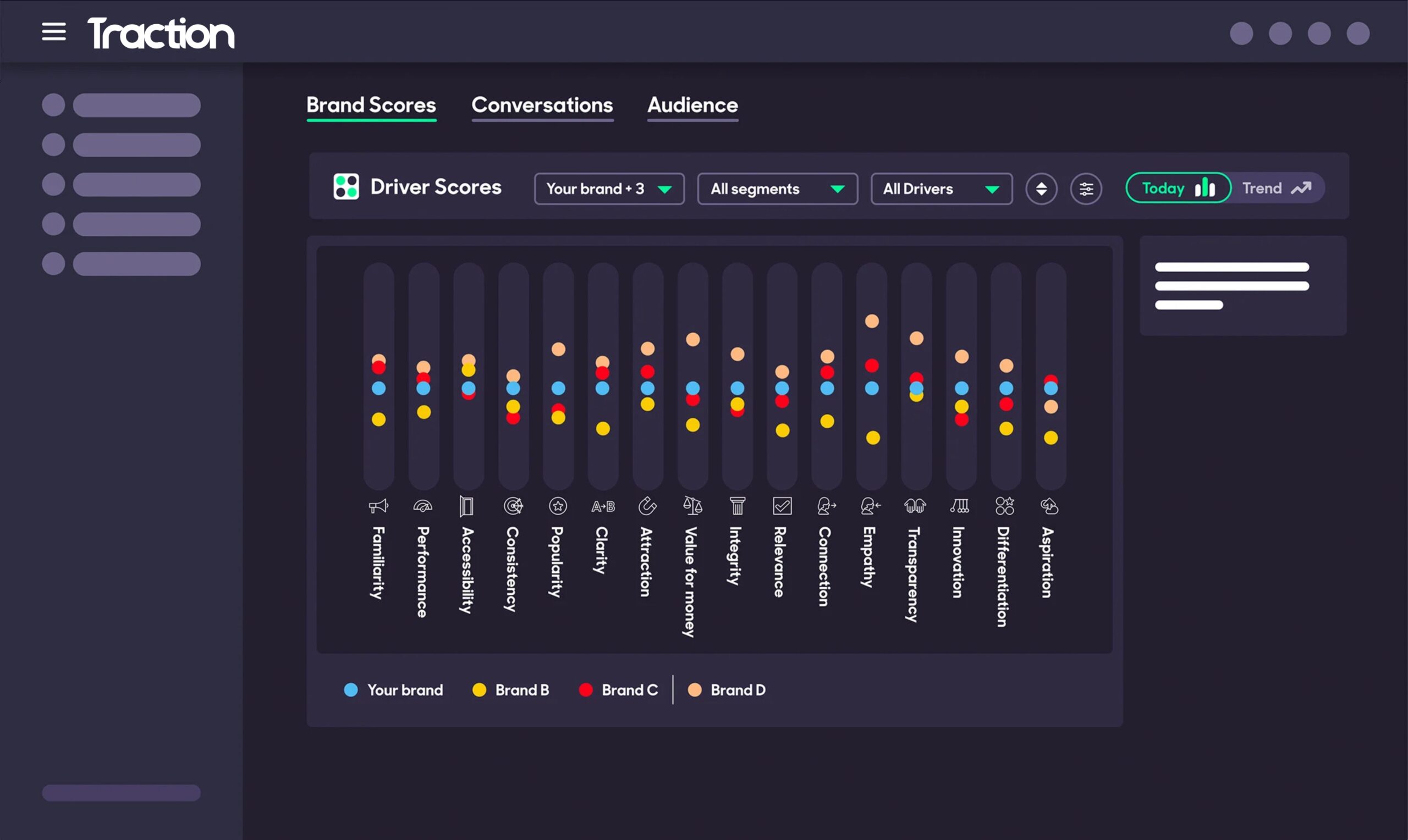
At Traction, we measure brand growth through a set of Drivers that capture how people feel and think about brands.
Customer insights play a critical role in understanding performance across Drivers such as Connection, Relevance, Clarity and Innovation.
For example, feedback might highlight that your brand is well known but poorly understood, pointing to a gap in Clarity. Or it may reveal that your proposition is not standing out, signalling a Differentiation issue.
When feedback is mapped to these Drivers, it becomes far easier to prioritise action and drive meaningful change.
Methods for Collecting Customer Insights
Surveys and Questionnaires
Surveys remain one of the most scalable ways to gather structured feedback.
They allow you to capture sentiment at scale, track changes over time and compare performance across audiences.
When designed well, surveys can provide both quantitative signals and directional insight into how your brand is performing.
Social Media Listening
Social media offers a real-time view of how people are talking about your brand.
It provides unfiltered, organic feedback that can highlight emerging trends, sentiment shifts and potential issues early.
However, it should be used carefully, as it often captures extremes rather than a balanced view of your audience.
Customer Interviews and Qualitative Research
Interviews and focus groups provide depth that other methods cannot.
They help uncover motivations, emotions and context behind behaviour, offering richer insight into how people experience your brand.
While smaller in scale, these methods are invaluable for understanding the ‘why’ behind the data.
Why Always-On Insight Wins
Traditional feedback methods often rely on one-off studies or periodic surveys.
Modern consumer insight platforms allow brands to gather feedback continuously, creating a live view of how perceptions change over time.
This makes it easier to respond to shifts in sentiment, optimise activity in the moment and build stronger strategies based on real-time understanding.
Final Thought
Customer feedback is only valuable if it leads to action.
The brands that grow are those that can turn feedback into insight, insight into decisions and decisions into measurable outcomes.
When done well, customer insights become the foundation of smarter marketing, stronger relationships and long-term growth.