

Brand Strategy
World Chocolate Day is more than a calendar moment. It is a snapshot of how the chocolate category is evolving.
As competition intensifies and challenger brands gain ground, consumers are demanding more than just taste. While flavour still matters, shoppers are now weighing up ethics, innovation, authenticity and cultural relevance when deciding which bar to reach for.
In a crowded and emotionally driven category like chocolate, relationships matter. And those relationships are shaped by more than sweetness alone.
Let’s look at how leading brands are strengthening their position and where the biggest opportunities lie.
Consumer Trends in the Chocolate Category
Through the Traction 16 Drivers framework, we can see which factors shape brand strength within the chocolate category.
Every category has what we call Hygiene Drivers. These are the fundamentals consumers expect brands to deliver.
In chocolate, the key Hygiene Drivers are:
- Accessibility
- Familiarity
- Popularity
- Performance
Any brand entering this space must first meet expectations on these Drivers. If a chocolate brand is difficult to find, unfamiliar or fails to deliver on taste and quality, it will struggle to compete.

However, meeting expectations is not enough to drive growth.
The real opportunity lies in the Opportunity Drivers. These represent areas where consumer needs are not fully satisfied across the category.
In chocolate, two of the most notable Opportunity Drivers are:
- Innovation
- Transparency
Brands that lead in these spaces create differentiation. They give consumers a reason to switch, trade up or advocate.

Green and Black’s: Leading with Transparency
Green and Black’s launched its “Wildly. Deliciously. Organic.” campaign with a clear focus on authenticity.
Rather than presenting a polished, idyllic version of nature, the campaign leaned into something more raw and visceral. The brand chose to highlight the rugged origins of its ingredients and the integrity of its sourcing.
This strengthens the Transparency Driver. By being explicit about process, provenance and production, Green and Black’s reinforces trust and builds a deeper emotional connection with consumers who care about how their chocolate is made.
In categories where ethics and sustainability are gaining weight, transparency is no longer optional. It is a competitive lever.
Galaxy: Relevance Through Modernisation and Innovation
Galaxy has taken a different approach.
After more than six decades in market, the brand refreshed its packaging to modernise its look and increase relevance. The new design is cleaner, more confident and aligned with contemporary aesthetics.
This supports the Relevance Driver, ensuring the brand does not feel dated in a category where challenger brands are highly design-led.

At the same time, Galaxy continues to push Innovation, launching new variants and expanding its vegan offering. According to Traction data, the brand performs strongly on Aspiration, Differentiation, Innovation and Integrity.
For established brands, the challenge is staying contemporary without losing recognition. Galaxy’s strategy reflects an attempt to balance both.
Tony’s Chocolonely: Integrity as a Growth Engine
Tony’s Chocolonely has built its brand around one clear mission: ending exploitation in the chocolate industry.
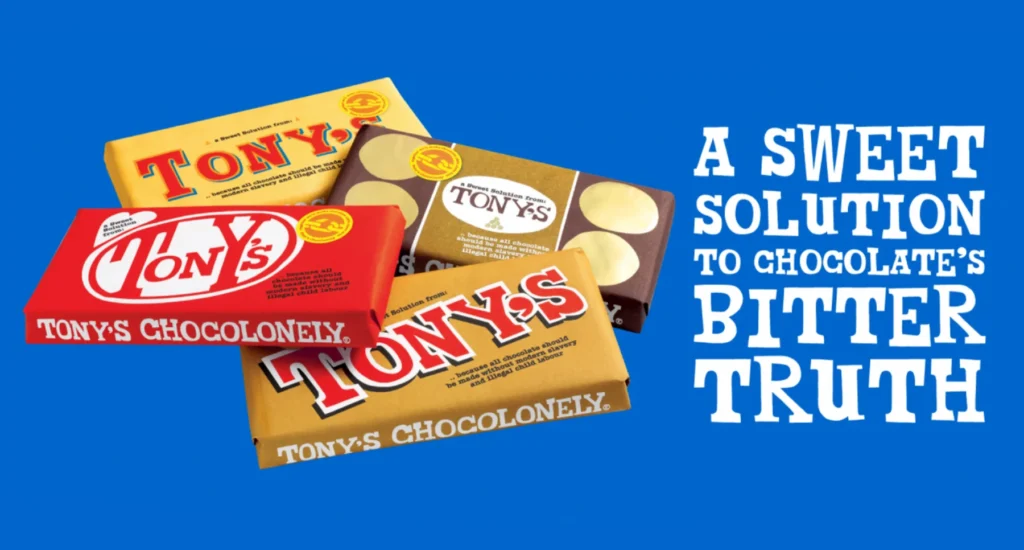
Its “Sweet Solution” campaign demonstrated bold category disruption. By mirroring the packaging of major chocolate brands, Tony’s made a pointed statement about industry-wide accountability while reinforcing its own commitment to ethical sourcing.
This is a textbook example of the Integrity Driver in action. The brand is not simply communicating values, it is acting on them.
In competitive markets, integrity becomes a powerful differentiator. When consumers believe a brand consistently does the right thing, loyalty strengthens even when alternatives exist.
Cadbury: Empathy at Scale
Cadbury has also managed to strengthen its position during a volatile period.
While many chocolate brands experienced declining Driver Scores, Cadbury bucked the trend. Its campaign encouraging shoppers to support local high streets demonstrated strong Empathy.
By acknowledging the anxieties faced by small businesses during the pandemic and inviting consumers to participate in community recovery, Cadbury reinforced its human side.
Empathy, particularly in emotionally driven categories like chocolate, builds connection beyond product attributes. It reminds consumers that brands can play a meaningful social role.
What This Means for the Chocolate Category
Chocolate remains a competitive and emotionally rich category. While Accessibility and Performance remain essential, they are no longer enough to secure leadership.
The brands gaining momentum are those strengthening Innovation, Transparency, Integrity and Empathy.
In saturated markets, differentiation rarely comes from taste alone. It comes from how brands show up, what they stand for and how consistently they deliver on their promises.
That is why understanding performance across these Drivers matters. Growth in mature categories is driven by strengthening relationships, not just increasing distribution.
This is exactly why Traction focuses on understanding how brands perform across these Drivers continuously, not just during campaign moments.